Miami to Nassau...this is NOT that boat
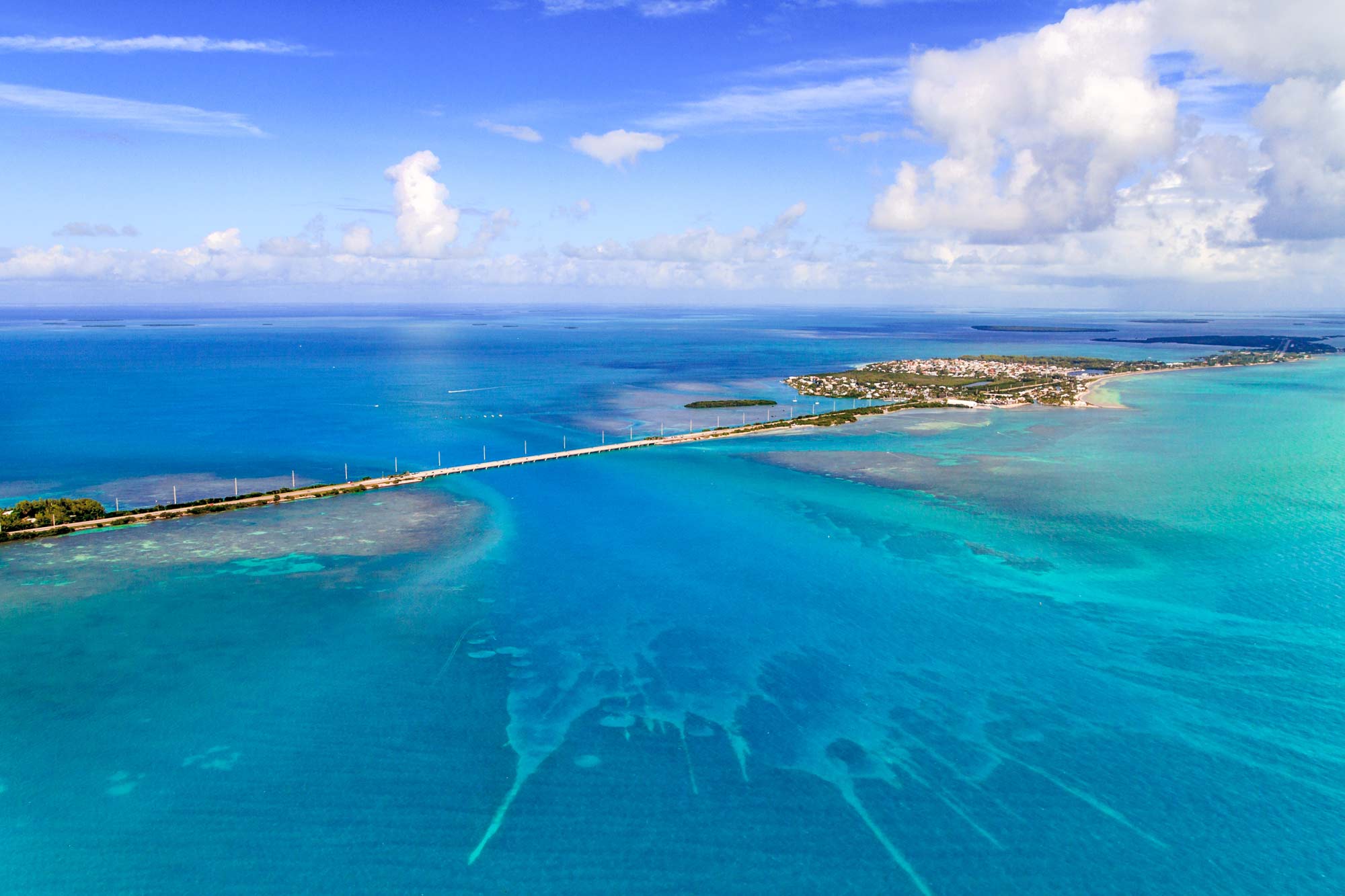
Growing up in South Florida you cannot be unaware of the ocean. You are never more than a half hour drive from it, and it dominates things in every way...it is only 100 miles from the Atlantic to the Gulf of Mexico. To the South is the Caribbean. And in between is the Intertcoastal Waterway, the Everglades, Okeechobee, and more lakes, canals, and streams than you can count.
Water is literally everywhere. With the daily 4PM thunderstorms, it is in your hair and clothes as well. You simply cannot be unaware of it, consciously or not.
So, no wonder one of the largest boating events in the world takes place across the southern part of the peninsula...the South Florida Boat Show, which showcases the boating industry from Palm Beach to the Keys every year.
There are open venues, boats on display, and races of both power and sail boats. And it was that last which got my attention as a young man just starting my working years.
My first real job of consequence, which started a career in tech just as that world was startihng to really explode, was as a software developer for the First National Bank of Miami, later to become the flagship of Southeast Banks. The fourth floor of the bank, where my cubicle was located, overlooked Bayfront Park and Biscayne Bay.
It was literally impossible to ignore the water and the boats either tied up in the nearby Marina or plying the waters of this aquamarine paradise.
So ignoring to the South Florida Boat Show week was virtually impossible. I could literally walk, in less than ten minutes, to where there was a large display of nautica at the foot of the Miami River, where it emptied into the Bay.
This display was on and adjacent to a large parking lot which fronted the Dupont Plaza hotel. I'm pretty sure this was filled land which was six or more feet above where the river would have naturally emptied its Everglades fed waters into the Bay. Its northern edge was a long mooring place faced with either a concrete wall or wood pilings...given that these memories are now many decades old I think I can be forgiven for being a bit foggy on some details.
At any rate, during part of the show a number of sailboats were berthed along that wall. These were yachts which were there to compete in one of the events that, in my memory at least, was held as part of the Boat Show week activities...the Miami to Nassau yacht race.
Oddly, in a place that is power boat heaven, I never was into boats as a kid. In fact, I only recall being out in a power boat once or twice, and the only time which sticks in my mind was a ride in my cousin Sonny's North American S19...a rocket ship of power which did nothing other than give me a headache as it pounded through the surf just off Miami Beach.
The S19 was a key part of the “Cocaine Cowboy” wild days of the 1960s, when South Florida accounted for most of the drug entering the country (“snow” in Miami became a common event in those times as the area literally floated on a sea of the drug). It became a race between drug runners trying to outrun the cops and law enforcement trying to get faster and faster boats to catch them.
And the boat builders were playing both sides of that particular street. Names like Cigarette and Donzi joined North American and Wellcraft to build faster and faster small boats to either run the drugs into the county or to catch the drug runners.
Sonny's S19 sported a powerful 300+ cubic inch Chrysler V8 inboard/outboard. But by the time Southeast moved the data processing group to the former Miami News building on the Miami River, right next door to the Dade County Sherriff boat patrol HQ, the S19s I saw on my lunchtime strolls along the riverfont sported two Chrysler V8s...rocket ships which barely touched the water as they flew after the “cowboys.”
By this time I was well along in my car and motorcycle worlds. I had a low powered Austin Healey Sprite (and later Porsche 914) which more than made up with super handling what it lacked in acceleration...and for that I had bikes like my Suzuki X6 which could hit 30 faster than any car I know of and 60 faster than a Corvette. The last thing I wanted on the water was one more thing with an internal combustion motor.
My first foray into sailing was on a rather crude old wooden boat owned by a work colleague. Charlie (his last name has forever escaped my memory) was soft spoken and grey haired, perhaps prematurely, though I have always thought of him as considerably older than the average programmer in our group. In fact, I had quickly decided I needed to move up and out of programming as quickly as I could, as there was no one around me whose age exceeded 30, so I thought the job probably was a dead end.
To show you how things have changed, Charlie had this old and small Skipjack berthed in the marina right at Biscayne Park, a land whose premium values have, I'm sure, long since chased out anyone with so modest a vessel.
 |
| My tribute to my first foray into sailing A larger, commercial version Skipjack The Second wooden boat model I built |
Skipjacks were East Coast boats used mainly for lobster fishing, much of it illegally. Thus they were built for speed and a quick getaway from legal authority in water hopefully too shallow for the law boats to follow. They were gaff rigged rather than being mast top sloops, though I really don't know the reason for this choice of sail design, then or now.
As I got back into model building I began to focus on kits which had some resonance with my personal history. The first wooden kit I attempted was a tribute to my own Venture 21, bought too late in my life for me to be up to the physical demands of rigging and takedown of a trailerable sailboat.
The first sailboats which actually caught my attention as being, perhaps, an attainable goal, was indeed what I believe was the first practical “trailer sailer,” the original Venture 17. I must have read about this exciting new design somewhere and began daydreaming about getting one, as I knew I could not afford the cost to berth and maintain a boat at a marina. In restrospect, when I finally DID, very late in life, get a Venture, I should have looked for the more easily managed 17 rather than the significanly larger and heavier 21 (the extra four feet roughly doubled the overall size and weight of the boat).
 |
| My Tribute to Girasole The Venture I finally got Too late in life to manage The first wooden boat kit I built |
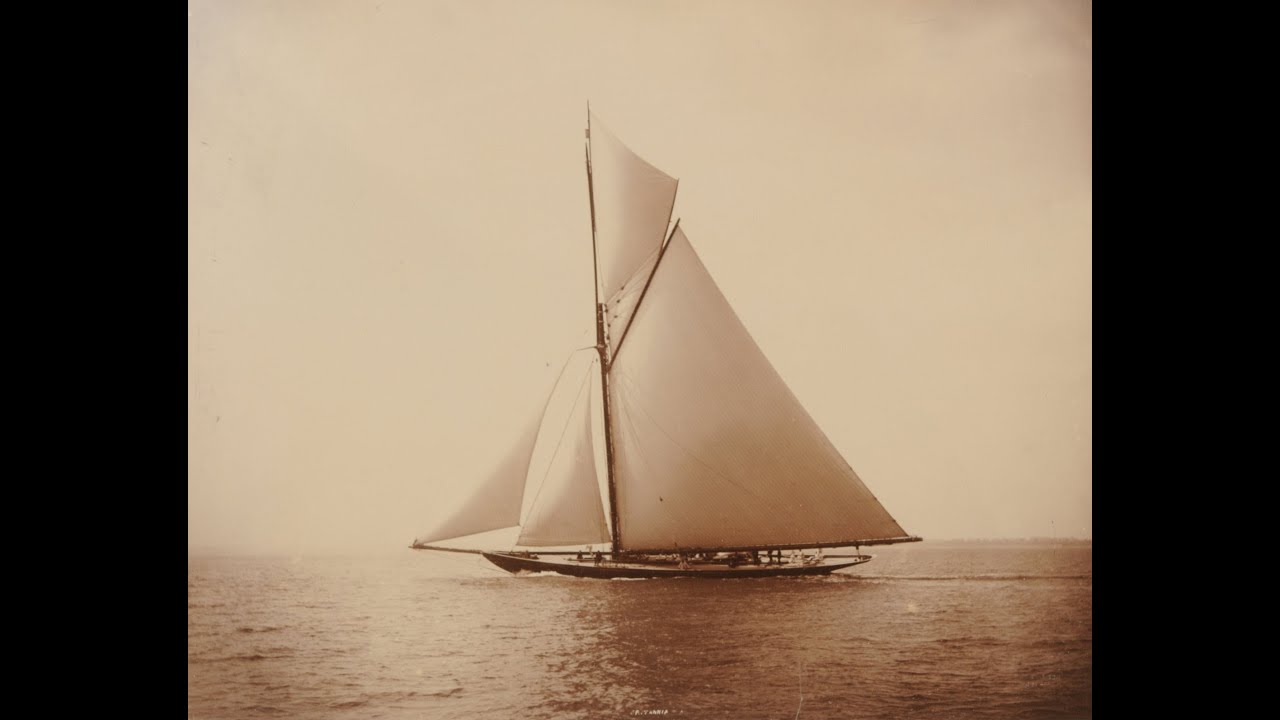
Time plays tricks with memory. Looking today at photos of the Miami to Nassau boats entered in modern versions of the race, they seem modest in size. That is not what sticks in my foggy memory of seeing them tied up for display and (at least in my mind) open viewing by the public prior to the race. To me, perhaps due to my more modest dreaming, they seemed quite large and elegant.
Thus, when I decided to build a model in tribute to that vision, I settled on the Britannia as a yacht worthy of my apparently exaggerated memories. Like those, she is sleek, tall, elegant, and achingly lovely. A vision of romance and grace...the dreams I've always had about the haunting glide of sailing the turquoise wonder of the Florida Keys....a place where you could walk a half mile from shore and enever be in water deeper than your waist nor cooler than body temperature, where you could see a tropical paradise of birghlty colered fish paying round your toes.
Little did I realize this model was way over my head in terms of the skill required to build it.
 |
| Lines Everywhere Hard to get 1:1 scale fingers in to attach... Yet more lines |
This was only my third wooden boat model kit. The sloop tribute to my Venture 21 was relatively simple, though the board on bulkhead hull construction was a frustrating and challenging learning experience.
The Skipjack was easy in that regard, as the hull was slab sided and made up of a simple, single sheet for each of the sides and the bottom. It also was a simple sloop rig, with only a jib and main sail.
But the Britannia was about a tenfold increase in complexity from either of these kits. Though still “only” a single masted sloop, as a racing boat it sports incredibly complex sail configuration and control lines to “tune” the five sails sprouting from that single mast, including extensions itself significanlty longer than the hull of the boat. Thus it combined the board on bulkhead complexity of the sloop with extensively enhanced gaff rigged main and several fore and top sails, with control lines creating a forest of rigging to thread the builder's hands through in order to stitch the main and other sails to the mast and spars.
 |
| Yikes! All this in an area my small hand could fit over |
In fact the hull is even more compllcated than the board on bulkhead design would already make it, as it is double clad. The horizontal first layer of cladding is then overlaid with thin mahagoany strips applied in a lazy “S” pattern. I suppose this duplicates how the original was built, but other than in terms of that educational value I'm not sure what this adds to the model, as the final step in finishing the hull for either the sloop or the Britannia is skinning the entire hull with wood filler which then is sanded to the final hull profile.
As I age I have developed a nerve condition called “essential tremors. As I told the neurologist who diagnosed me, “if they're so essential you can have them.” They cause my fingers to wobble a bit of their own accord, without any conscious input from me. When I was younger my hands were so steady I could hand hold a camera set with an exposure of longer than 1/30 “ without any noticeable blurring of the negative. Now, fine motor movements such as threading lines on the crowded rigging of this model is a real, and really frustrating, challenge.
I've learned a lot about the Britannia (and the Pen Duick, a pretty obvious copy) by building the model. The most obvious being the huge amount of sail she could carry. If you look at the height of the main section of the mast, to this point the sail area is already substantial and appears capable of llively performance in even light breezes. But then you notice that there is an extension that adds an additional 1/3 length to this already impressive “stick.” And that is not even the end of the height possible. Add in the spar of the sail that can be raised above the main and you add yet another 10% to the total height.
 |
| Lovely And a hell of a challenge to build |
The end result is a total possible mast height that significanly exceeds the length of the hull. Add in the relatively low freeboard (the distance from the waterline to the deck) and you have a boat that looks fast even standing still. Maybe I should look up pictures of the American contender which werested away the cup which forever became known as “Americas.” But remember this boat is a royal touring yacht, with a lot of below deck creature comforts, as well as a racer. Doubly impressive.
For a single masted sailboat it is massive. Look at the length of the boom, which actually extends well psat the stern of the hull. Note how the hull, never really very wide relative to the length, narrows to an almost disappearing width at the stern. And look again at how much overhang there is bhind the rudder, limitijng the theoretical hull speed, though that already must be massive for a boat this long.
I'm not too sure about the spar that is anchored at the front of the msat. If this is for a spinnaker take a gander at the size of the pole and imagine what THAT sail must be like in terms of area. Note also how the leading jib spar adds to foresail capacity.
Finally, it is impossible to ignore the absolutely staggering number of lines used to tune the sails to virtually any wind conditions. Everything from the mast itself to all five possible sails (six if there was indeed a spinnaker) can be tuned by tightening or loosening various lines and the blocks associated with them.
I did not set out to make a career out of a single model. I merely wanted to evoke my nostalgic memories of the Miami to Nassau boats I saw and, perhaps, daydreamed about as a young man working on the shores of Biscayne Bay. Had I realized how “deep in the weeds” of model building this kit would take me, I never would have had the chutpah to attempt the project.
In the end, here's some idea of how this little project sucked me down the rabbit hole.
I began the build on January 2, 2026 and finished the last bit of rigging on April 22 of that year...some 112 elapsed calendar days. Of these I actually worked on the model at least 72 days, working as little as one and as many as seven and one half hours per day. The total estimated work hours on the project comes to 249. These are relatively accurate numbers, as once I opened the kit and looked at the various plan sheets and vague instructions I decided to try and keep track of the effort.
Speaking of that...this kit assumes you are an experienced builder. There are no reall step by step instructions. What text there is on the various sheets are more like general guidelines or descriptions. Just to make this even more challenging, the English translations from the Italian original are pretty crude and confusing, and while I could wade through much of the original language, much of that was nautical terminology or otherwise peculiar to that language colloquialisms. The best part of these was a very good formulaic technique for guiding you on how to run the myriad of lines on the boat.
Whatever possessed me, in my naivety, to take on this sophisticated a model? It has been a humbling experience to build, though the sheer beauty of the design makes me very proud to have been able to “stumble through” the learning curve to build it.